Your hydrant system is installed. But when was its readiness last verified?
A red hydrant, a hose cabinet and a pump room are visible signs of fire protection. They do not, by themselves, confirm that water will reach the required outlets at the pressure and flow your building needs.
For facility managers, fire hydrant system maintenance means keeping equipment accessible, arranging appropriate testing and following unresolved issues through to closure. This matters in factories, warehouses, commercial buildings and housing societies, where everyday changes can affect readiness. The following seven questions can help you have a more useful conversation with your maintenance provider.
A fire hydrant system brings together a water supply, pipe network, valves, outlets, hose equipment and, where required, pumps. These components need to work together according to the approved design.
When discussing types of fire hydrant system, distinguish internal hydrant arrangements from external hydrant networks. A property may be equipped with either system or both. Riser arrangements, pump configurations, building height and site risks also influence maintenance needs.
Keep approved drawings, commissioning results, equipment manuals and previous service reports available. They provide the starting point for reviewing your fire hydrant installation , including any changes made after commissioning.
A tank on site does not automatically confirm that the firefighting water supply is available as intended. Ask your service provider how they verify water availability, the designated firefighting reserve, refill arrangements and relevant supply components. Where fitted, level indicators and associated alarms should also be included in the appropriate checks.
Consider recent changes. Has other water use affected the reserve? Has tank cleaning or repair interrupted availability? Is an unresolved leak being investigated?
Ask for evidence: a dated record of the water supply review, any limitations identified and the action assigned to address them.
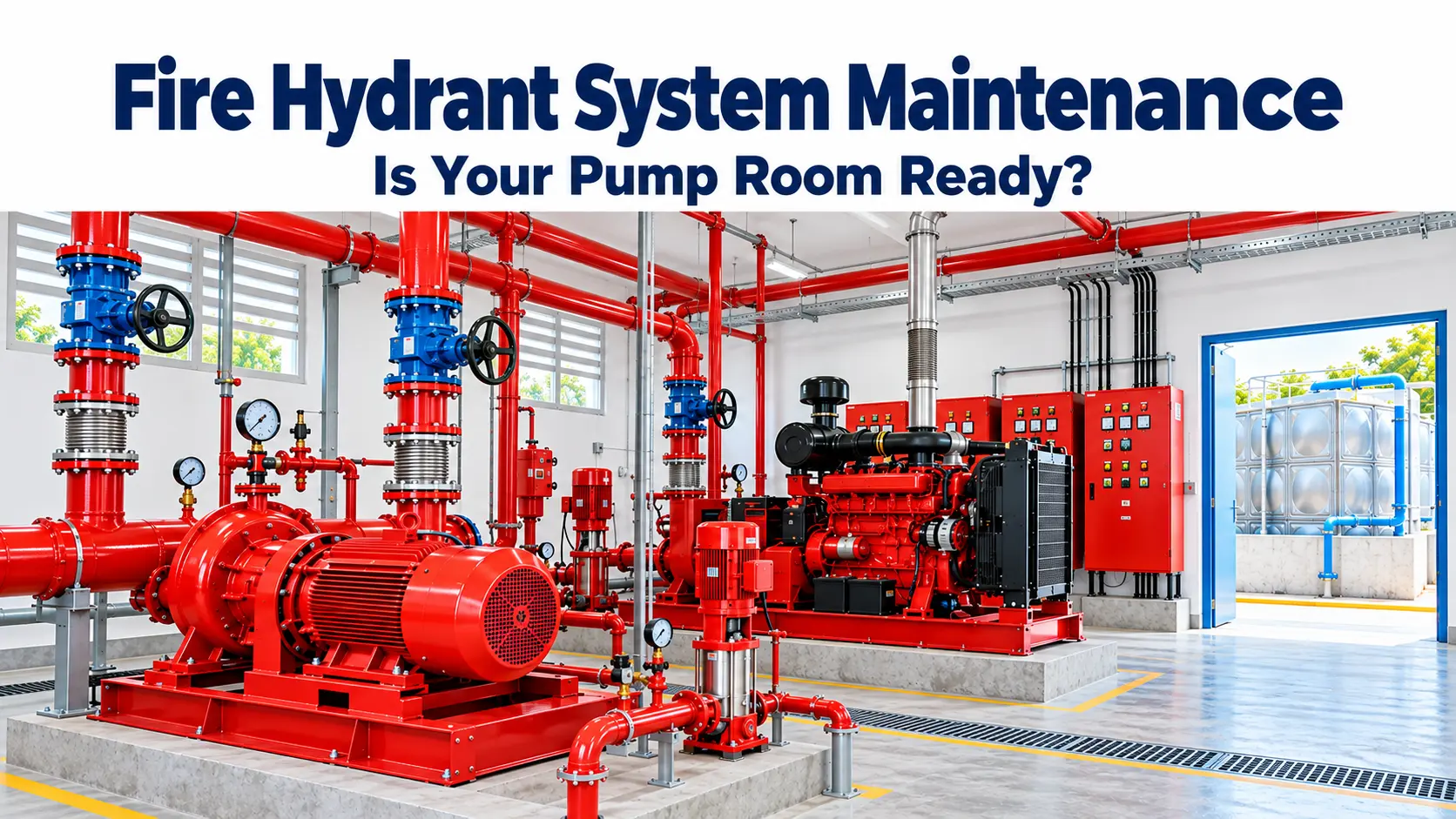
A fire hydrant pump that starts is not necessarily a pump that delivers the required performance. Depending on the installation, the arrangement may include an electric main pump, a diesel standby pump and a jockey pump. A jockey pump helps maintain system pressure; it does not replace the main firefighting pump.
Ask whether the relevant controllers, automatic starting functions, power supply and standby arrangements have been checked. Diesel-driven equipment also requires attention to its engine and supporting systems according to applicable instructions. Unusual noise, vibration, leakage or repeated faults deserve investigation. A fault should not disappear from the discussion simply because the pump operated during a short run.
Ask for evidence: pump test results, recorded observations and the status of outstanding faults.
A fire hydrant valve needs to be identifiable, accessible and maintained for its role in the system. Ask whether relevant control valves are in their designated normal positions and whether leakage, damage or operating difficulties have been reported.
A fire hydrant landing valve provides an outlet for connecting firefighting hose in an internal hydrant arrangement. Its outlet, cap, connection and operating components should be reviewed by competent personnel using the applicable procedure.
The fire hydrant pipe network also deserves attention. Visible corrosion, damaged supports, leaking joints or alterations may indicate a need for further assessment. Painting over rust does not establish the condition of the pipe beneath it.
Ask for evidence: identified valve and pipe defects, their locations and any further investigation required.
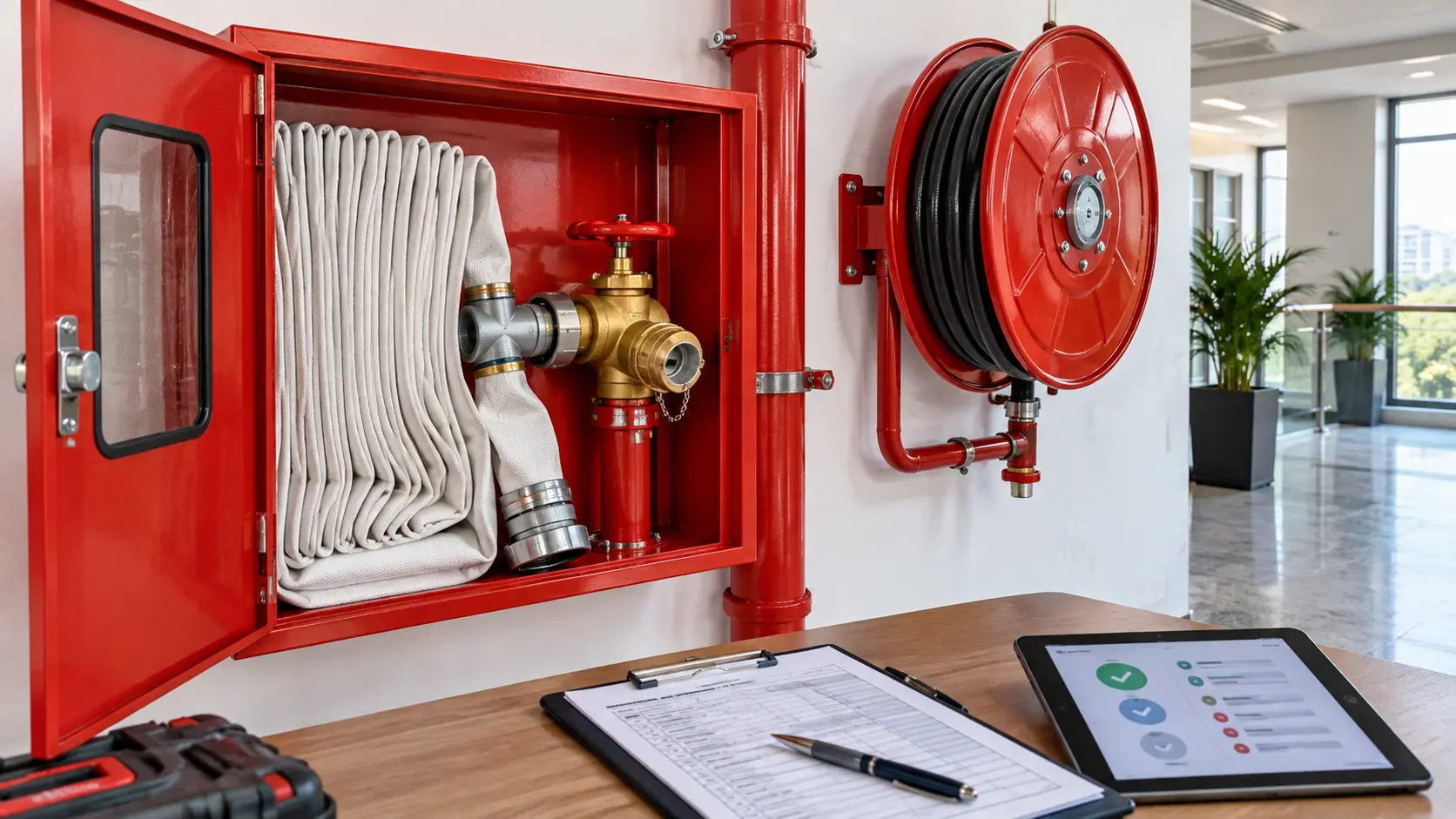
A closed cabinet can conceal missing or deteriorated equipment. Ask whether the required hoses, nozzles and couplings are present, compatible and in suitable condition. Storage conditions, physical damage and deteriorated connections can affect usability.
Where installed, a fire hydrant hose reel should be reviewed for hose condition, nozzle condition, accessibility and operation under the appropriate maintenance procedure. A hose reel and a lay-flat hydrant hose assembly are different equipment arrangements and should not be treated as interchangeable. Hose testing requirements depend on the equipment, applicable standards and manufacturer instructions. Visual appearance alone cannot establish pressure integrity.
Ask for evidence: an equipment inventory, inspection findings and applicable test records.
Access can deteriorate between service visits. Deliveries, parked vehicles, office furniture or construction materials may block a hydrant or prevent a cabinet door from opening fully. Walk through the facility and review access to hydrant points, hose cabinets, pump rooms and relevant control valves. Check that equipment identification remains visible after layout changes.
Operational teams should know how to report an obstruction and who is responsible for removing it. Include access checks in routine facility observations, especially after storage changes or renovation work.
Ask for evidence: recorded obstructions, assigned responsibilities and confirmation that access has been restored.
Inspection and testing answer different questions. Inspection reviews observable condition; performance testing evaluates specified functions or measurable performance. Ask your provider which tests apply to your installation. Depending on its design and requirements, these may involve pump operation, pump flow performance, outlet pressure and flow, or relevant control functions.
Testing should be planned and performed by competent personnel using suitable equipment and procedures. Results should be assessed against the applicable design requirements and relevant baseline records-not simply marked “working.”
Inspection and testing requirements depend on the installation. Building use, equipment configuration, applicable Indian standards, local authority requirements, manufacturer instructions and the approved design all matter. Do not adopt a generic online testing frequency without checking its applicability.
For reference, BIS publishes standards covering internal hydrants and hose reels, and external hydrant systems. NFPA 25 addresses inspection, testing and maintenance of water-based fire protection systems where it is applicable; it should not automatically be presented as a legal requirement for every Indian property.
Ask for evidence: the test scope, method, readings, assessment and any limitations.
A service report is useful only when identified concerns lead to action. Each issue should have an equipment location or identifier, a clear description, an assigned owner and a target date. Record the repair or corrective work, any required verification and who confirmed closure.
Digital maintenance logs can make dates, responsibilities and repeat defects easier to track. Their value comes from accurate entries and follow-up, rather than the software alone. Where a defect affects protection, competent personnel should assess the impairment and the appropriate site response under the applicable procedure. Do not leave it as an unreviewed item on the next service list.
Ask for evidence: a current action register showing open issues, completed work and verification results.
The most useful question is not simply, “Has the system been serviced?” It is, “What was checked, what was tested and what remains unresolved?”
Review these seven areas with your maintenance provider, retain the evidence and revisit concerns after repairs or significant building changes. Installation is a starting point; continued readiness requires attention.
Need fire hydrant system support in Indore or across India? D'Park Corporation provides fire hydrant installation and maintenance support. Connect with our team to discuss your facility and its maintenance needs.